
Resilience Gardening
If you’ve ever grown food, medicine, fiber, or flowers with your ecosystem and community in mind, you may already be a resilience gardener. Resilience Gardening isn’t a brand-new invention, it’s a name for practices that humans have carried for generations. What makes it unique today is how we bring these practices together to face the challenges of our time.
What Resilience Gardens Can Do
Feed people
Imagine tomato vines climbing a fence, berry bushes heavy with fruit, even vegetables that return year after year.
Heal ecosystems
Imagine bees buzzing in wildflowers, soil rich with nutrients, birds nesting in nut trees.
Protect communities
Imagine shade from trees on the hottest days, gardens soaking up heavy rain instead of flooding streets, hedges calming strong winds.
Conserve water
Imagine mulch keeping roots cool, rain barrels catching stormwater, deep-rooted plants holding moisture in the ground.
Provide medicine
Imagine chamomile blossoms for tea, mint for digestion, elderberries boosting immunity in winter.
Support mental health
Imagine a quiet corner to rest in the shade, hands in the soil easing stress, colors and scents that brighten the spirit.
Build connection
Imagine neighbors sharing herbs over the fence, community harvest days, children planting seeds side by side.
Nourish food justice
Imagine shared garden beds where anyone can pick what they need, land tended collectively, food belonging to all of us.
Why they matter
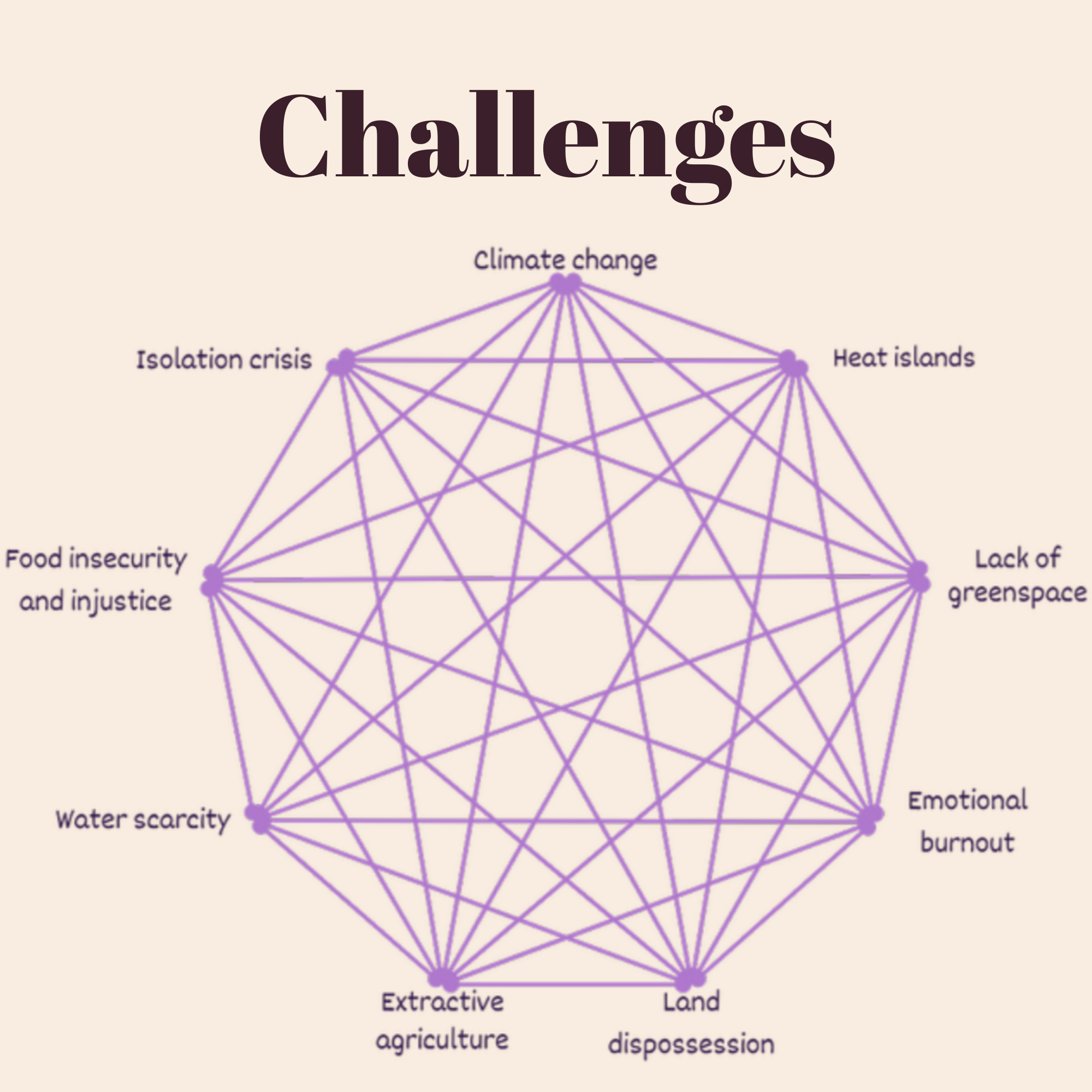
Human beings have always faced challenges, but today they are bigger and more tangled than ever. Climate change brings floods, droughts, and rising heat. Food insecurity leaves families unsure of their next meal.
Disconnection and isolation weaken our sense of belonging. And too often, political and economic systems block the very solutions people need most.
These struggles don’t stand alone, they feed each other. Extreme weather makes food insecurity worse. Isolation makes it harder to work together for change. Political inaction leaves people to face crises on their own.
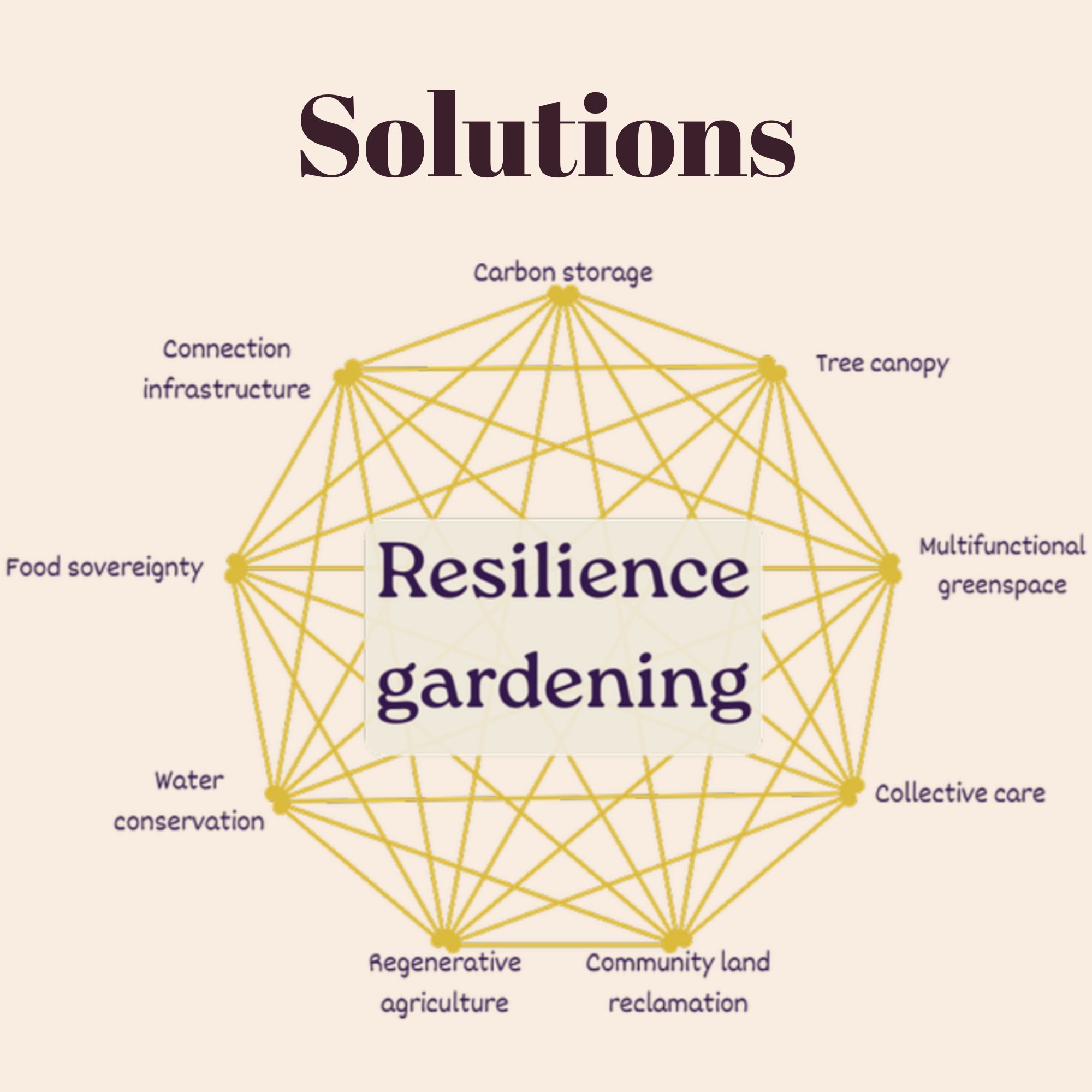
Resilience Gardens weave the threads back together. One garden can feed people while cooling a neighborhood. It can create habitat while building community. It can offer medicine while restoring soil. It can spark joy while modeling collective care. Resilience isn’t built one issue at a time, but all at once — always interconnected, like the roots of a thriving forest.
© 2025 Ayla Bella • Shared with love under CC BY-NC-SA 4.0
The Pillars of Resilience Gardening
Resource Resilience
Resilience Gardens grow more than food, they grow capacity. Vegetables, herbs, mushrooms, fiber, and medicinal plants reduce dependence on fragile supply chains while nourishing the people who tend them. They also spark sharing and create abundance that belongs to the community.
Ecological Resilience
Resilience Gardens work with nature instead of against it. They restore soil, welcome pollinators, hold water through drought, and cool overheated streets. By caring for ecosystems, they help people and the planet weather extremes together.
Social Resilience
Gardens can be places of resistance, healing, and reconnection. They become hubs where people gather, share resources, and build trust. Rooted in justice, they return growing power to communities long excluded from land and food.
Emotional Resilience
In a world heavy with climate anxiety and disconnection, gardening offers grounding and healing. These spaces name grief, cultivate hope, and support joy. They nourish the spirit as much as the soil.
Political Resilience
Resilience Gardens are living commons. They show that collective solutions are possible, model systems of shared care, and inspire action that reaches beyond the garden fence. Each plot is a vision of the future we can build together.
Honoring our roots
We come from indigenous agriculture.
From Indigenous agricultural traditions, we honor traditional ecological knowledge and the enduring relationship between people, land, and culture. Resilience Gardening roots itself in reciprocity, biodiversity, and respect for Indigenous communities whose stewardship endures despite colonization and displacement.
We come from organic gardening.
From organic gardening, we carry the commitment to growing food without chemical shortcuts, centering soil health and natural cycles. Resilience Gardening builds on this legacy by nurturing living soil, protecting pollinators, and growing food in ways that care for soil, water, and the hands that tend them.
We come from permaculture.
From permaculture, we inherit the wisdom of designing with nature, not against it. Resilience Gardening builds on this foundation with systems thinking, closed-loop cycles, and practices that regenerate the earth while feeding us all.
We come from victory gardens.
From victory gardens, we remember how people mobilized in times of crisis to feed their families and neighbors. Resilience Gardening carries this spirit forward, making gardens a living infrastructure of resilience, solidarity, and everyday abundance.
We come from community gardens.
From community gardening, we carry forward the power of shared plots that provide nourishing food and access to green space. Resilience Gardening grows from this tradition of harvests that care for both land and community.
We come from guerilla gardening.
From guerrilla gardening, we propagate the radical joy of reclaiming neglected spaces and transforming them into oases. Resilience Gardening carries forward this spirit of direct action and renewal.
We come from the food justice movement.
From permaculture, we inherit the wisdom of designing with nature, not against it. Resilience Gardening builds on this foundation with systems thinking, closed-loop cycles, and practices that regenerate the earth while feeding us all.
We come from Black agrarian traditions.
From Black Agrarian Traditions, we honor the resilience of enslaved and displaced Africans and their descendants, whose knowledge and labor shaped sustainable agriculture even under oppression. Resilience Gardening carries forward this legacy of survival, creativity, and liberation.
Join the Guild

Pages
Socials


© Copyright 2026. Grow Anyway. All Rights Reserved.